
BUP67 - AddEcoJet
Investigation on Expanding the Processing Limits of Sustainable, Coarse Metal Powders in Binder Jetting
Additive manufacturing (AM) processes can produce lighter and more readily available components with enhanced functionality, acting as a gateway to innovative electromobility concepts.
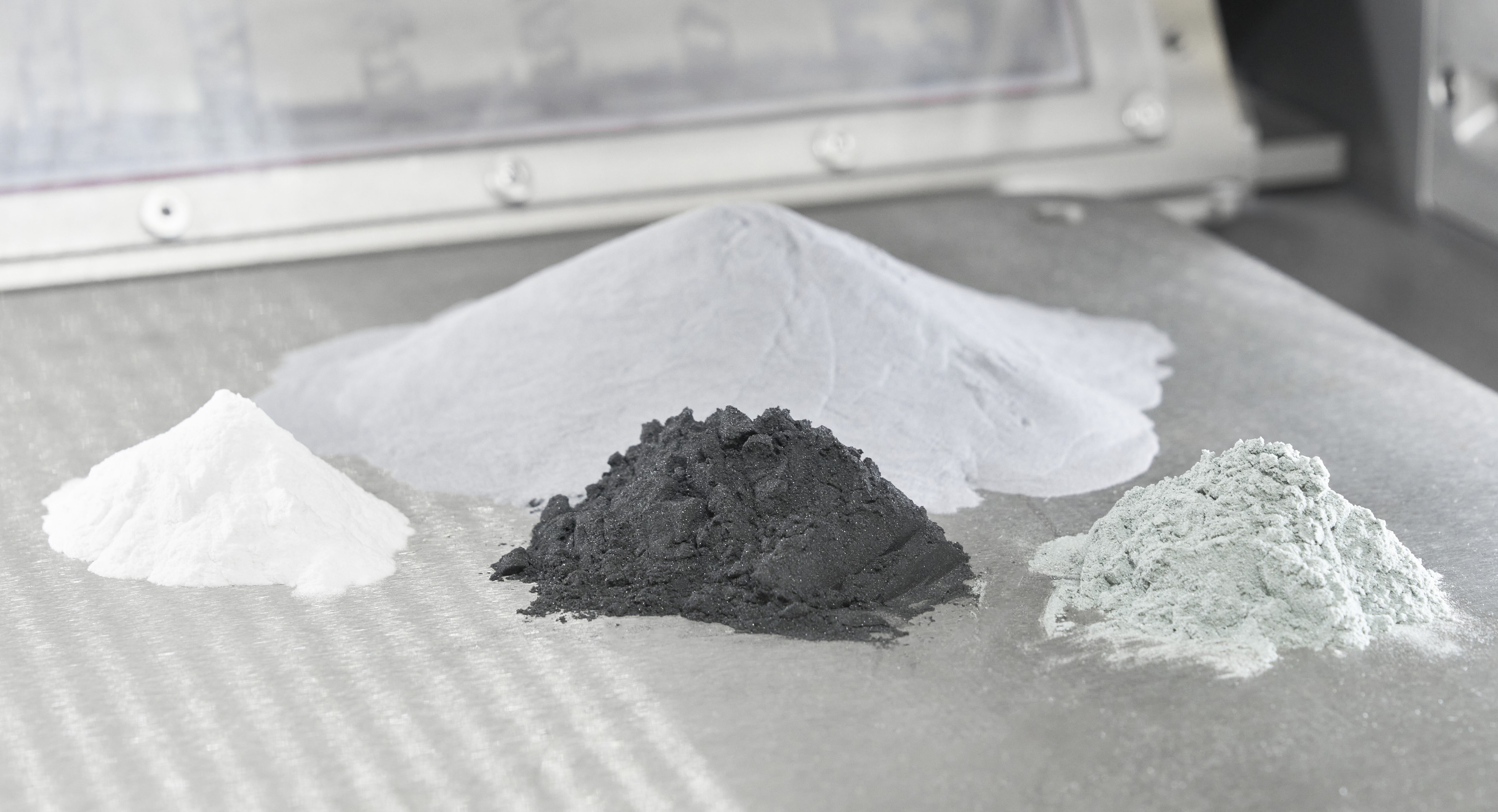
Metal powder-based additive manufacturing processes require specifically prepared metal powders. However, the production of these raw materials generates large quantities of coarse powder that is not suitable for use. Currently, there are few valuable applications for this powder. The energy-intensive production coupled with low discharge rates results in high costs for AM materials.
Processing coarse powders in melting AM processes is critical because a lower surface-to-volume ratio makes it difficult to transfer heat to the powder via laser.
Aim
The project aims to expand the processing capabilities of coarse metal powders using a sinter-based AM process and optimized process chain. This should increase the cost-effectiveness of the atomization process and reduce AM powder costs. Second, the binder jetting (BJT) process will be adapted to process these powders, thereby increasing its cost-effectiveness.
Binder jetting stands out due to its low manufacturing costs and high scalability in terms of batch and component size. However, the low specific surface area of coarse powder particles also poses a challenge for the subsequent sintering process. Powder modifications and optimization of sintering strategies are intended to expand processing capabilities. The goal is to maximize sintering density to improve the properties of the resulting component, such as thermal conductivity, strength, and surface quality. A central challenge of the BJT process chain is the strength of the green part, which determines powder removal. Therefore, powder development also aims to maximize green part strength.
Approach
- Characterize and optimize layer-forming processing properties.
- Optimize component density by developing new powder concepts and sintering strategies.
Benefit
- Added value for powder manufacturers: Increased cost-effectiveness of the atomization process and expanded product portfolio and sales opportunities
- Added value for AM users: Reduction in material costs
- Added value for BJT system manufacturers: A new unique selling point compared to other AM processes.
Key data
Research Field
Manufacturing SystemsPeriod
01.03.2026 until 30.11.2026Project participants
KIT: Institute of Production Science (wbk, Prof. Zanger)
Contact
Thilo Zimmermann
Deputy Managing Director, Head of Research Coordination
- Phone
- +49 711 685 60960
- fk@icm-bw.de